Matted Dog Fur: Why It Happens, Why It Hurts, and What Groomers Do
Mats pull on your dog's skin and can hide sores. Learn how to spot them, how to prevent them, and when a shave-down is the kindest option.
By the WeDoPetz grooming team · · 3 min read
Mats are one of the most common problems groomers see, and one of the most misunderstood. They're not just a cosmetic issue. A matted coat can be uncomfortable or even painful for your pet. Here's what you need to know.
What is a mat?
A mat is a dense clump of tangled hair. It starts when loose hair gets caught in the coat instead of falling out, and then twists together with the hair around it. Moisture, friction and time make it tighter. Eventually mats can form a solid layer close to the skin, sometimes called "pelting."
Why mats hurt
- They pull on the skin every time your pet moves.
- They trap moisture, dirt and debris against the skin.
- They can hide irritation, hot spots, sores or parasites.
- Mats around the legs and ears can restrict movement.
Where mats form first
Check the places where there's the most friction: behind the ears, under the collar or harness, in the armpits, on the belly, between the back legs, on the tail and around the paws. Curly and long-coated breeds, like doodles, poodles, shih tzus and long-haired cats, are the most prone.
How to prevent mats
- Brush down to the skin, not just the top layer. A slicker brush followed by a comb works for most coats.
- Brush after baths and swims. Water tightens tangles if the coat dries without brushing.
- Keep up with grooming. For curly and long coats, a full groom every 4–6 weeks keeps the coat manageable. See how often to groom your dog.
- Choose a shorter cut if brushing at home is hard to keep up with.
- Watch harnesses and sweaters, which cause friction mats.
What a groomer does with a matted coat
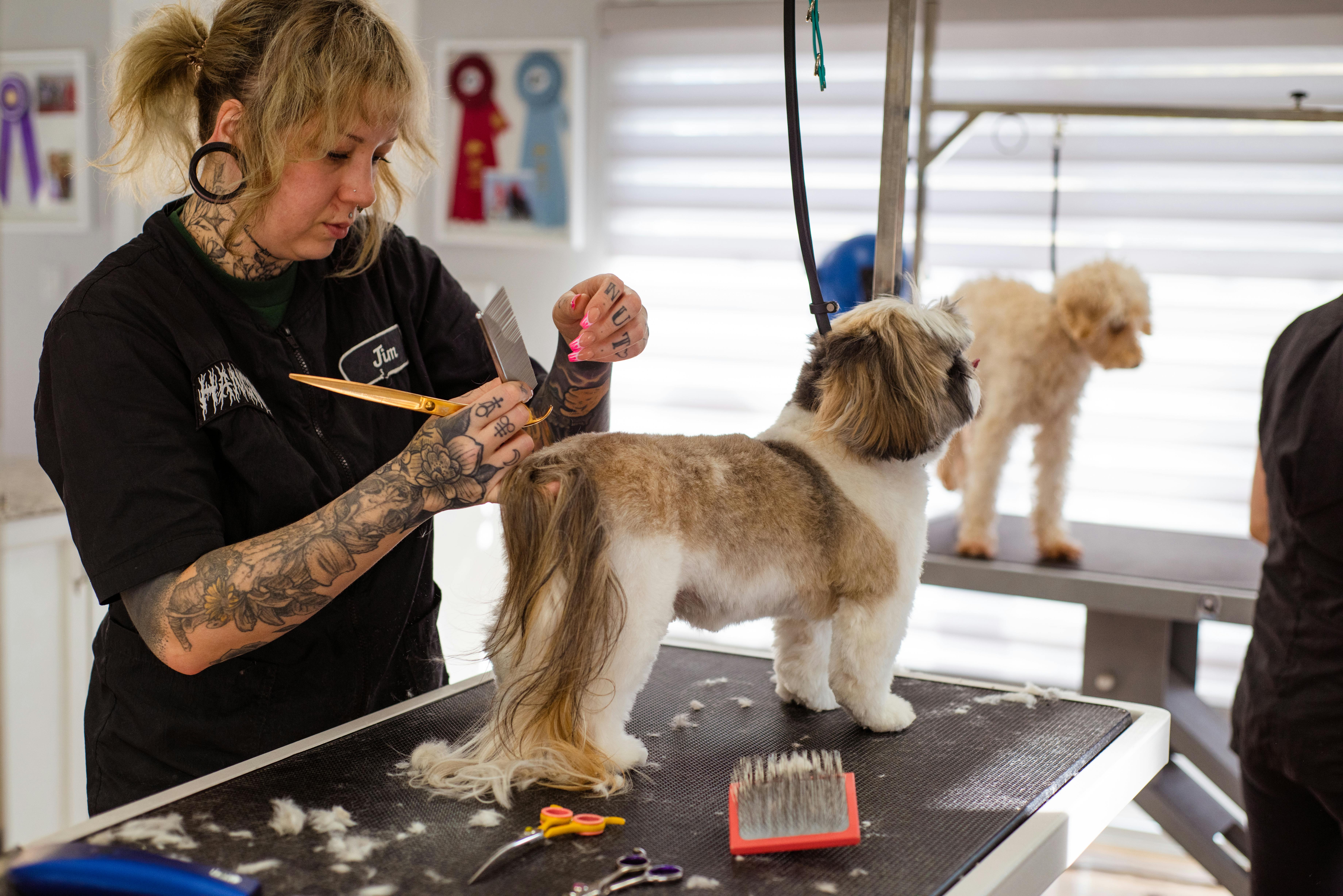
Small, loose mats can often be brushed out with a de-matting tool and conditioner. It takes time and patience, and it shouldn't hurt. That's why de-matting is charged as an add-on: it's extra time on the table.
Severe matting is different. When mats sit tight against the skin across large areas, brushing them out would mean pulling on your pet's skin for a long time. In those cases, the most humane option is usually a shave-down: clipping the coat short underneath the mats so the skin can breathe, and starting fresh.
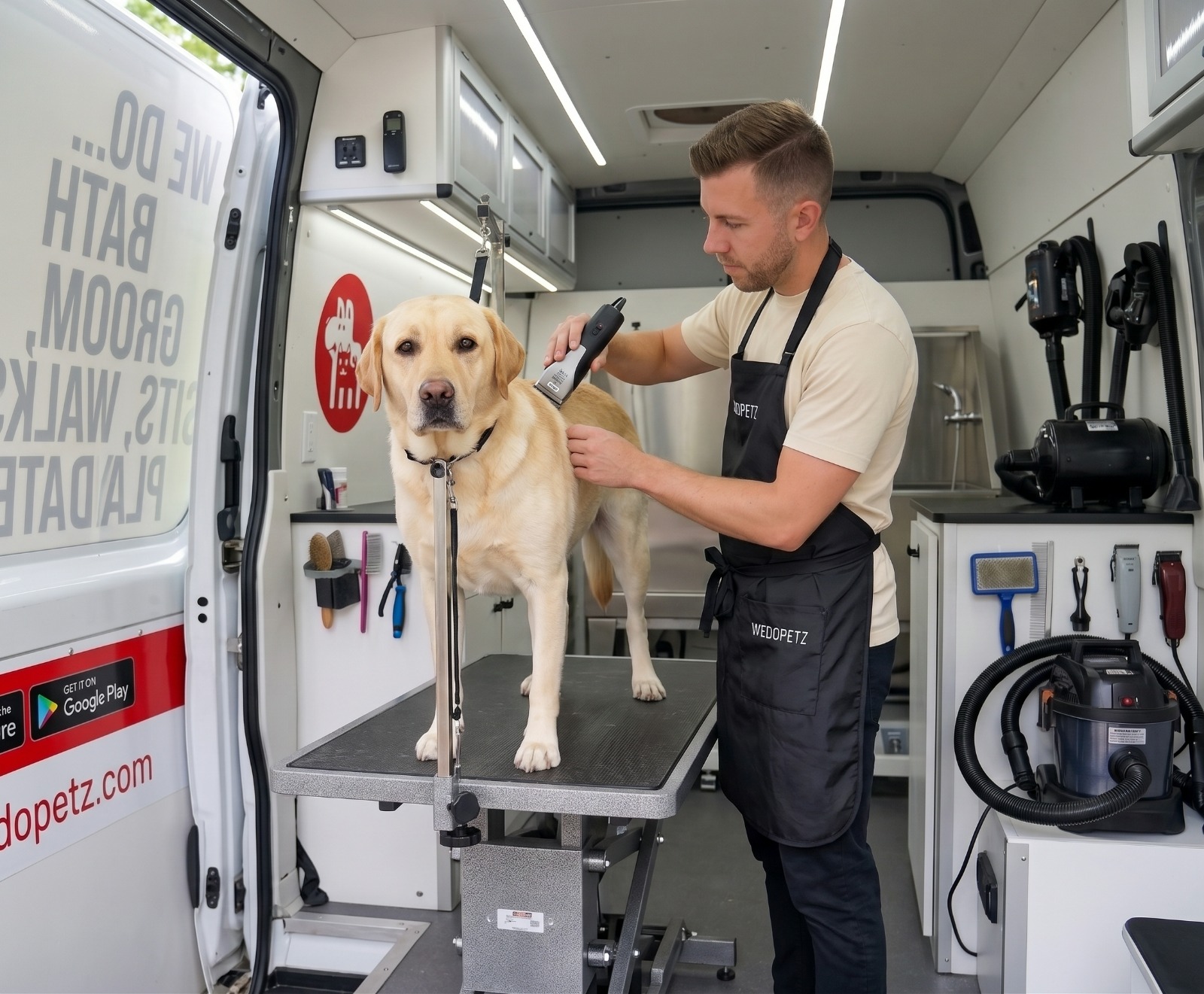
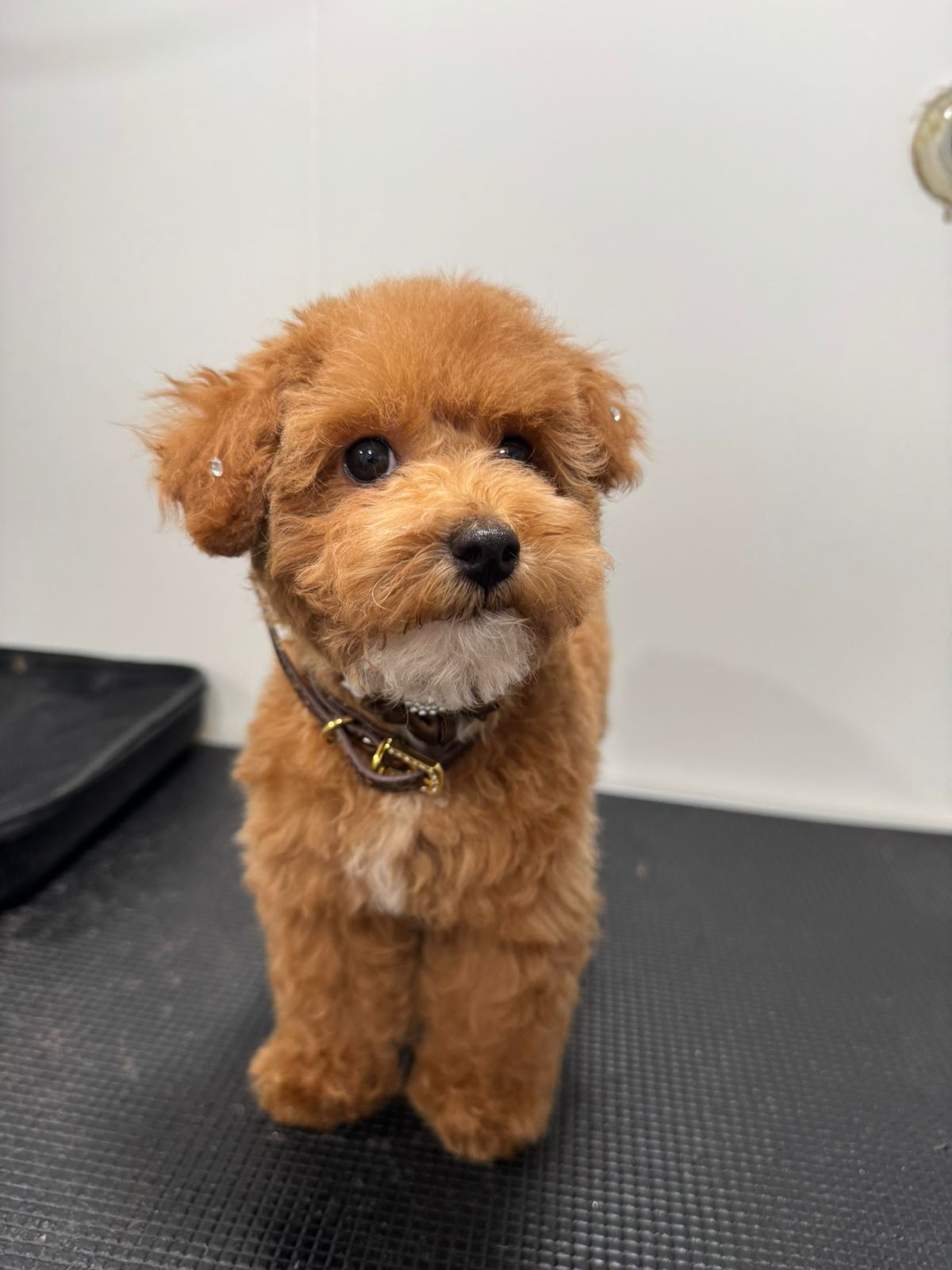
A shave-down isn't the haircut most owners imagine, and that can be disappointing. But the hair grows back, and your pet will feel much better right away. At WeDoPetz, when you book a pet with a matted coat we tell you upfront that a shave-down may be needed and ask for your approval, so there are no surprises when the groomer arrives.
After a shave-down
- The skin may look a little pink or sensitive for a day or two. Contact your vet if you see redness that gets worse, scratching or sores.
- Keep your pet warm in cold weather. A sweater helps, but take it off often to avoid new friction mats.
- Start a brushing routine as the coat grows back, and book the next groom in 4–6 weeks.
When to call a groomer
If you can feel mats close to the skin, don't try to cut them out with scissors. It's very easy to cut the skin, because it gets pulled up into the mat. Let a professional handle it. When you book, mark your pet's coat as matted or severely matted so your groomer arrives prepared.