How Often Should You Bathe Your Dog?
How coat, skin and lifestyle set the right bathing schedule, why water can tighten mats, and what to do between baths.
By the WeDoPetz grooming team · · 4 min read
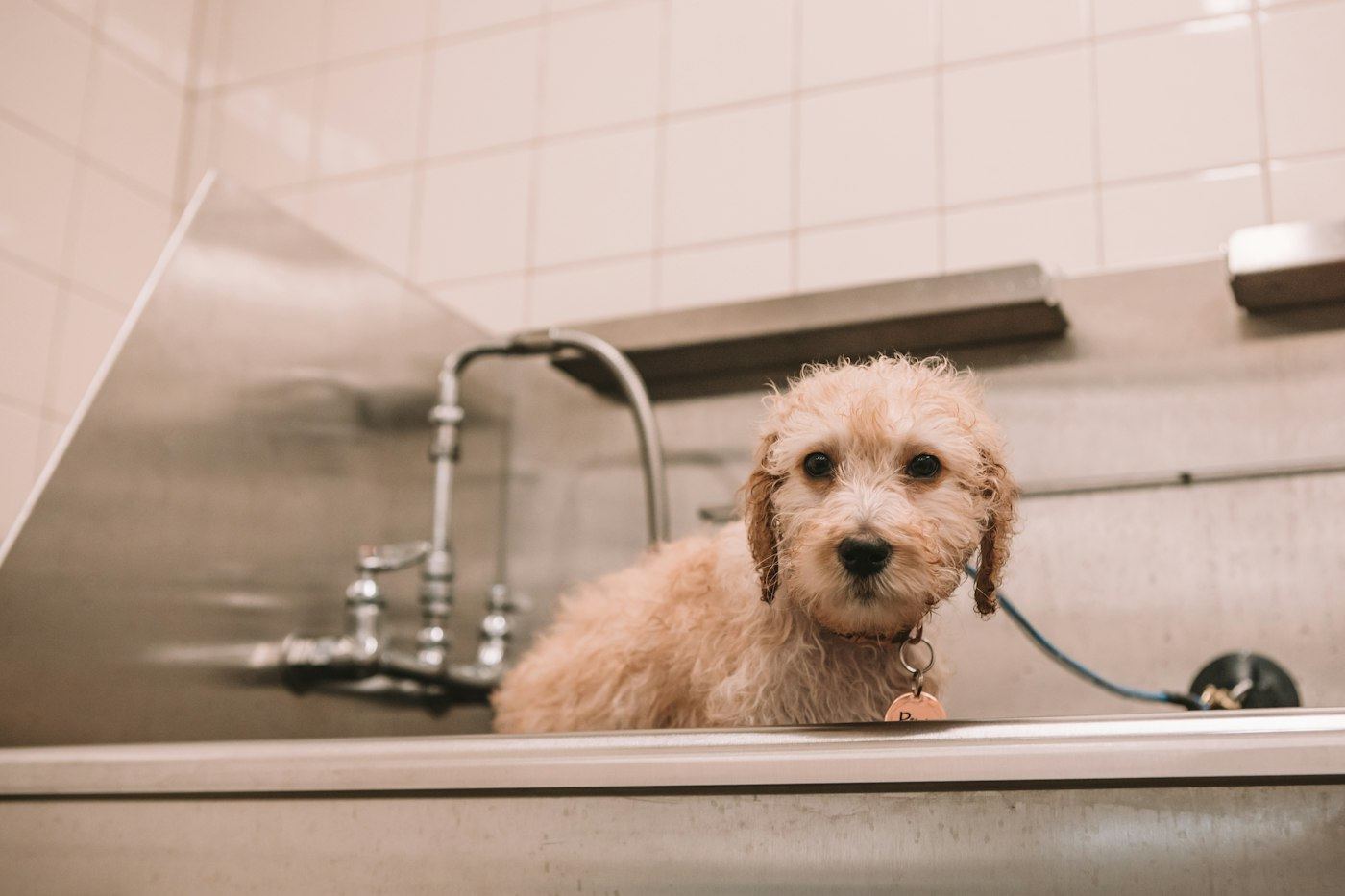
Some dogs find mud five minutes after a bath. Others can stay surprisingly clean for weeks. That is why a fixed rule such as "once a week" or "once a month" is not useful for every dog. Bathing frequency should reflect the dog's coat, skin, activity level and the products being used.
The goal is not to keep a dog smelling like shampoo at all times. The goal is to remove dirt, oil and debris while keeping the skin comfortable and the coat easy to maintain. A thoughtful bath is part of grooming; repeated unnecessary bathing with the wrong products is not.
What determines bathing frequency?
A short-coated indoor dog with healthy skin may need less frequent bathing than a long-coated dog that plays outside, swims or gets visibly dirty. Dogs with oily coats may need more cleansing, while dogs with sensitive skin may need a veterinarian-directed routine.
Coat density matters as much as hair length. A thick double coat can hold dirt, oil and moisture near the skin even when the surface looks clean. A curly coat can trap debris and begin matting if it is not brushed before and after bathing. Very active dogs may simply become dirty more often.
Rather than following a universal calendar, look at coat condition, odor, lifestyle and any veterinary recommendations.
A professional bath is more than shampoo
Good bathing starts with complete saturation. Water has to reach through the coat to the skin. Shampoo then needs to be distributed thoroughly rather than sitting only on the surface. Heavy or oily coats may require a second wash.
Rinsing is equally important. Product residue can irritate the skin and leave the coat feeling heavy or dull. Professional groomers spend a surprising amount of time rinsing because clean-looking foam is not the same as a completely rinsed coat.
Drying is the final step, not an afterthought. Dense coats should be dried fully, because trapped moisture can create odor and contribute to skin irritation.
Why bathing can make mats worse
Water tightens existing tangles. On a long, curly or wavy coat, putting a matted dog into the tub can turn a loose knot into a compact mat. Shampoo and rubbing can tighten it further.
This is why coat preparation matters. Before bathing a mat-prone dog, check common trouble spots such as behind the ears, armpits, chest, belly, legs and tail. Small tangles can often be removed before the bath. Tight mats close to the skin should be evaluated by a groomer rather than repeatedly soaked and brushed.
After bathing, dry the coat completely and brush it through again.
What products should you use?
Human shampoo is made for human skin and is not the best default choice for dogs. Canine grooming products are formulated for the needs of dog skin and coat, and professional groomers may choose different products depending on oiliness, coat texture or sensitivity.
More shampoo is not automatically better. Strong fragrance is not proof of cleanliness. A dog can smell highly perfumed while still having product residue or an underlying odor source.
If a dog has a diagnosed skin condition, use the veterinarian's instructions rather than substituting a cosmetic shampoo because the label sounds soothing.
Why does my dog smell again so quickly?
A strong odor that returns immediately after a thorough bath may come from somewhere other than general coat dirt. Ears, skin folds, the mouth, damp undercoat, anal glands and some skin conditions can all produce odor.
If the dog smells unusual, has discharge, redness, repeated licking, head shaking, obvious discomfort or intense itching, another bath is not automatically the answer. The smell may be information.
Groomers can identify that an odor seems unusual, but diagnosis belongs with a veterinarian.
How to keep a dog clean between baths
Most dogs do not need a full bath every time they get a little dirty. Wiping muddy paws, drying the beard, brushing out debris, cleaning bedding and towel-drying after rain can extend the time between full baths.
During a Massachusetts winter, paws and lower legs may collect road salt, slush and grime. In warmer weather, swimming and outdoor play create different cleanup needs. Small targeted cleanups are often more practical than repeatedly soaking the entire dog.
A professional grooming schedule can handle the deeper bath and drying while the owner maintains the coat between visits.
Related guides: Why Does My Dog Smell After a Bath? · Dog De-Shedding · How to Brush Your Dog · What Is Mobile Dog Grooming?
When you want a hand, book a groom or see our prices.
Frequently asked questions
Can I bathe my dog every week?
Some dogs tolerate frequent bathing with appropriate products, while others need less. Skin condition, coat type and veterinary guidance should determine the routine.
Can I use human shampoo on my dog?
Dog-specific grooming products are the better default because they are designed for canine skin and coat.
Why does my dog still smell after a bath?
Persistent odor may come from ears, skin, trapped moisture, dental issues or other causes. If it is unusual or persistent, talk with your veterinarian.
Should I brush before or after bathing?
For long, curly or mat-prone coats, detangling before the bath is important. Brushing again during or after thorough drying helps keep the coat separated.