How to Brush Your Dog Properly
The right tool, working in sections and the metal comb test: how to brush all the way down instead of just the top layer.
By the WeDoPetz grooming team · · 3 min read
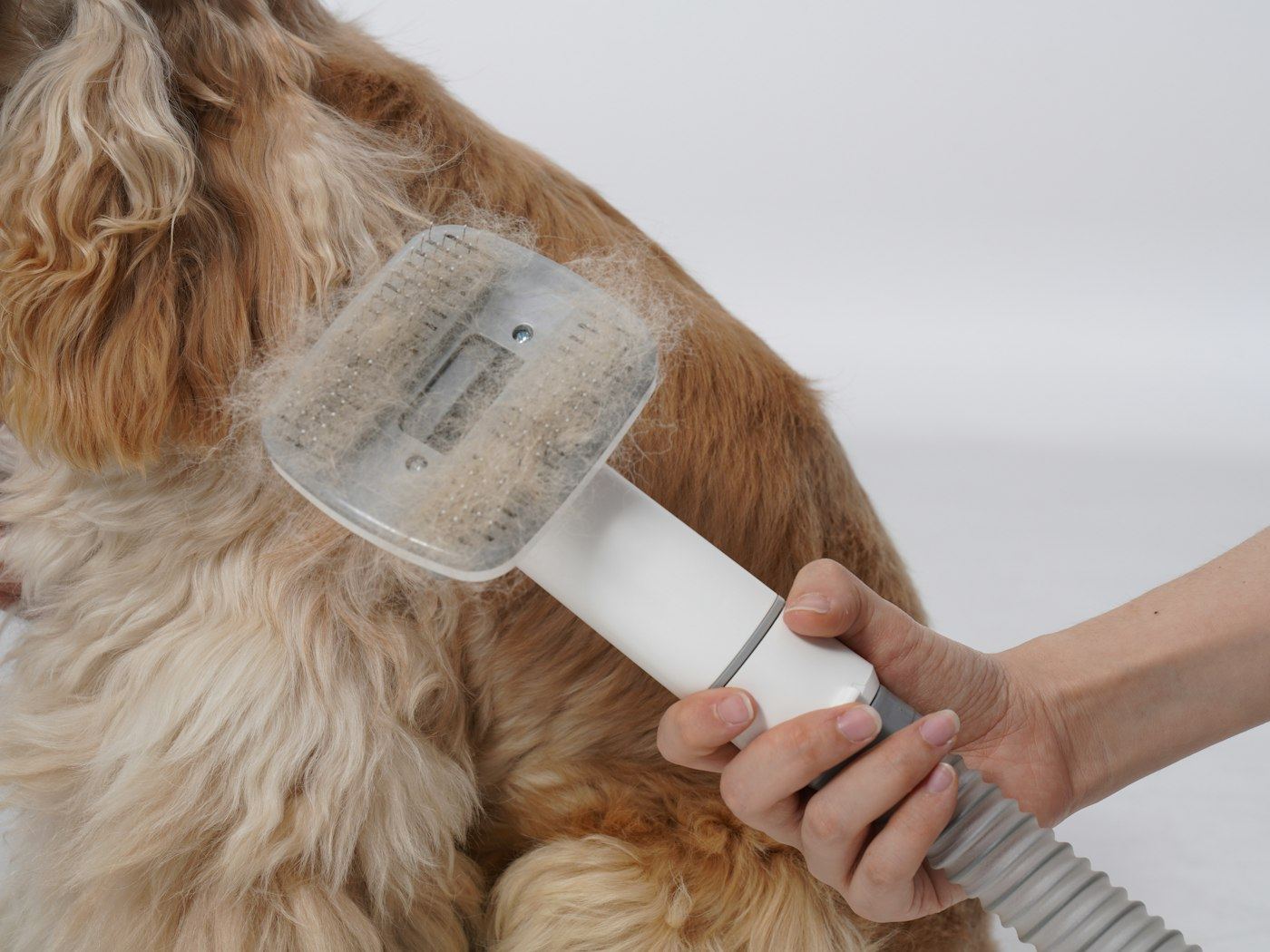
Brushing sounds simple until a groomer shows you a dog that looks fluffy on top but is completely tangled underneath. Effective brushing is less about moving a brush across the surface and more about reaching the part of the coat where loose hair and tangles actually collect.
The right tool, the right technique and a realistic frequency make a much bigger difference than brushing hard for a long time once every few weeks.
Match the tool to the coat
A short-coated Labrador, a double-coated Husky, a silky Yorkie and a curly Goldendoodle should not all be brushed with the same tool.
Slicker brushes, pin brushes, combs, undercoat tools and rubber curry tools each serve different purposes. The most aggressive-looking tool is not necessarily the best.
The objective is to remove loose coat and separate tangles without scraping the skin, cutting healthy hair or creating unnecessary discomfort.
For long coats, work in sections
Line brushing is a practical technique for longer or curly coats. Instead of brushing only the outside layer, separate a small section of hair, brush from close to the skin outward and move gradually across the body.
This exposes hidden tangles and prevents the common problem of a coat that appears maintained on top while matting develops underneath.
Work slowly around sensitive areas such as the armpits, belly and behind the ears.
Use a comb as the truth test
A metal comb is one of the simplest ways to check whether brushing actually worked. After brushing an area, pass the comb gently through the coat.
If it catches repeatedly, there are still tangles. Common trouble spots include behind the ears, armpits, chest, legs, collar line and tail.
The comb should move through without forcing. If it cannot, more brushing—or professional help—may be needed.
Do not fight tight mats
A loose tangle may come apart with careful brushing and patience. A dense mat close to the skin is different.
Pulling hard can hurt, damage hair and make the dog fearful of future brushing. If an area cannot be worked through without significant tension, stop.
A groomer can determine whether limited dematting is reasonable or clipping is the safer option.
Short frequent sessions win
Five or ten calm minutes several times a week can be more effective than one exhausting session every month.
Stop before the dog becomes frustrated. For puppies, pair brushing with treats and gentle touch exercises so grooming becomes normal handling rather than a sudden restraint event.
Consistency also makes it easier to identify a new tangle before it becomes a mat.
Brush before and after wet activities
Water tightens tangles. If a long-coated dog is going to be bathed or swims, check the coat first.
Afterward, dry thoroughly and brush again. Letting a tangled coat air dry can create compact knots that become much harder to remove.
This is especially important for curly and wavy coats that trap loose hair.
Know what brushing cannot fix
Brushing is maintenance, not medical treatment. If you find bald patches, sores, strong odor, inflamed skin or painful areas, stop treating the issue as a simple grooming problem.
A veterinarian should evaluate signs that may indicate infection, allergy, parasites or another medical condition.
The brush can reveal a problem. It cannot diagnose one.
Related guides: How to Prevent Dog Mats · Matted Dog Hair · Doodle Grooming · Puppy Grooming
When you want a hand, book a groom or see our prices.
Frequently asked questions
How often should I brush my dog?
It depends on coat type and length. Long, curly and mat-prone coats generally need more frequent brushing than short coats.
How do I know if I brushed all the way through?
Use a metal comb after brushing. If it cannot pass smoothly through the coat, tangles remain.
Should I brush a wet dog?
For most home routines, detangle before bathing and brush again during or after proper drying. Avoid aggressively pulling through wet mats.
Why does my dog hate brushing?
The brush may be catching tangles, scraping the skin or sessions may be too long. Reduce discomfort, use the right tool and rebuild tolerance gradually.