Why Is My Dog Shedding So Much?
What normal shedding looks like, why it can be dramatic in some seasons, and the warning signs that deserve a vet visit.
By the WeDoPetz grooming team · · 3 min read
Some dogs shed enough hair to make an owner wonder how they are not bald. In many cases, heavy shedding is completely normal, especially in breeds with dense undercoats. But "normal for the breed" and "normal for this dog" are more useful standards than simply measuring how much hair appears on the floor.
A predictable seasonal coat release is different from sudden hair loss, bald patches, broken hair or irritated skin. Grooming can manage loose coat very effectively, but not every shedding problem is a grooming problem.
Why dogs shed in the first place
Hair grows in cycles. Older hairs are released as new hairs develop, and the amount of visible shedding depends heavily on breed and coat type.
Labradors, Golden Retrievers, Huskies, German Shepherds and many other double-coated breeds can release large quantities of undercoat. Short hair does not mean low shedding; a Labrador can cover a sofa in small hairs while never needing a haircut.
Some curly coats appear to shed less because loose hair becomes trapped in the surrounding coat instead of falling freely. That trapped hair can contribute to matting.
Seasonal shedding can be dramatic
Many dogs shed more heavily as seasons change. Indoor heating and artificial light can blur traditional seasonal patterns, so some dogs seem to shed year-round with heavier bursts.
In Massachusetts, owners may notice major coat release during transitions into warmer or cooler weather. A dog that seemed manageable in January may suddenly need far more brushing in spring.
This is one reason grooming frequency should be flexible rather than based on the same routine all year.
What professional de-shedding can do
De-shedding combines bathing, complete drying and coat-appropriate brushing to remove loose hair efficiently. High-velocity drying can release a large amount of undercoat that ordinary surface brushing misses.
The result can be dramatic: less dead coat trapped against the skin and less hair waiting to fall around the home.
What it cannot do is stop the dog's natural hair cycle. Any service promising to permanently stop shedding is promising something grooming cannot deliver.
What owners can do at home
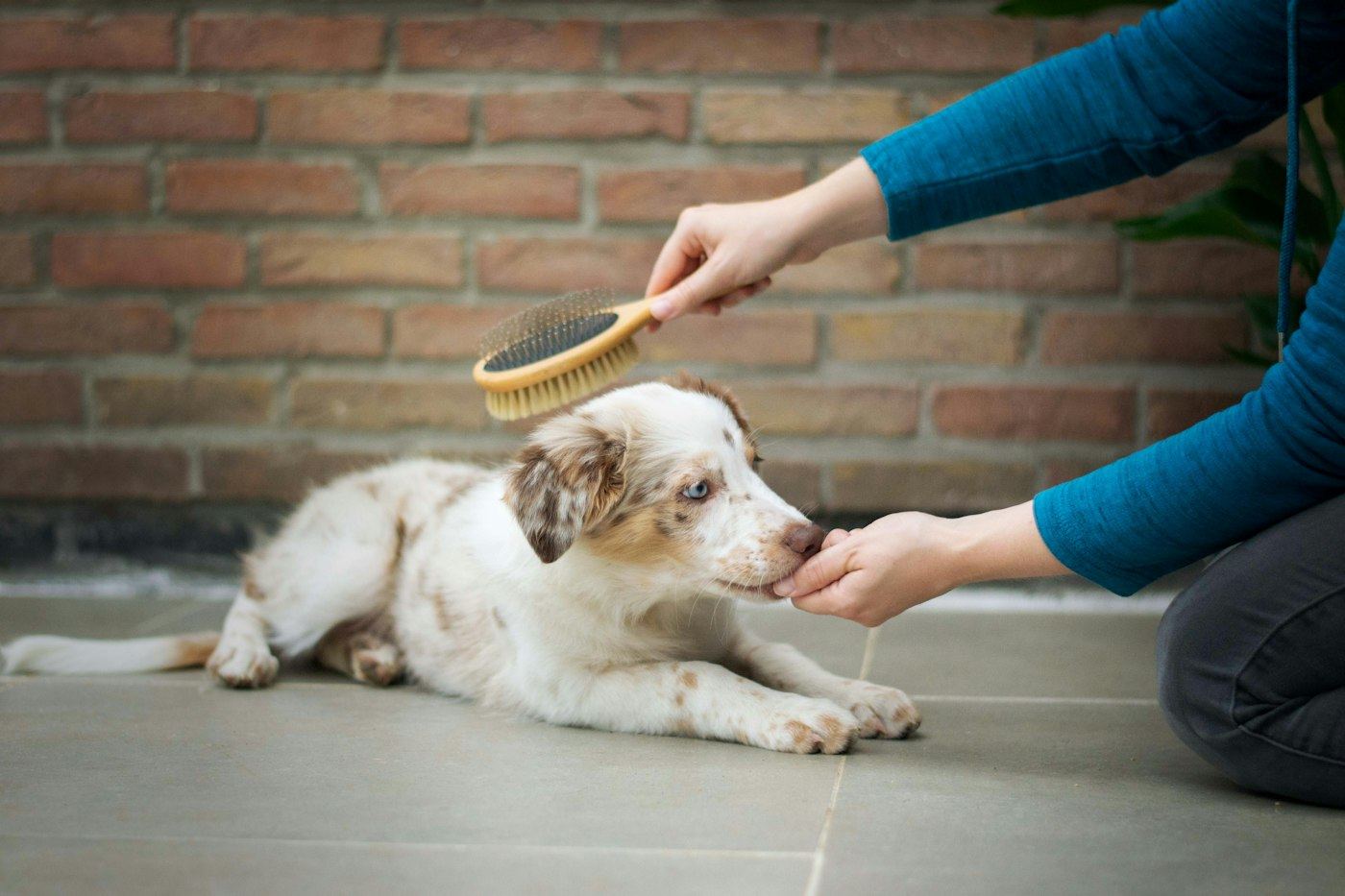
Regular brushing with the right tool is more useful than occasional aggressive brushing. The tool should match the coat. A rubber curry tool may be useful on a short coat, while a dense undercoat may need a rake or slicker used correctly.
Bathing and fully drying the coat can also help release loose undercoat. Dense coats should not be left damp near the skin.
The objective is steady maintenance, not attacking the coat only when the house becomes overwhelmed.
When shedding may be abnormal
Bald spots, redness, sores, strong itching, broken hair, unusual odor or a sudden major change in coat density should not be treated as ordinary seasonal shedding.
Parasites, allergies, hormonal conditions and other medical problems can affect the coat. A groomer can help remove loose hair and may notice that something looks unusual, but cannot diagnose the cause.
If the shedding pattern is new and accompanied by skin changes, a veterinary evaluation is the appropriate next step.
Make shedding part of the routine
For heavy shedders, a recurring bath-and-de-shed schedule is usually more effective than waiting until the coat is blowing everywhere.
Owners can combine professional appointments with short home brushing sessions. During peak shedding periods, frequency may temporarily increase.
The realistic goal is not a hair-free house. It is controlling loose coat before it accumulates on the dog, the furniture and every black shirt you own.
Related guides: Dog De-Shedding · Labrador Grooming · Golden Retriever Grooming · Husky Grooming
Ready for help at your door? Book a groom and see the exact price before you pay.
Frequently asked questions
Why is my dog shedding more than usual?
Seasonal change, coat type and indoor environment can all increase shedding. Sudden abnormal shedding with skin changes deserves veterinary attention.
Can a groomer stop my dog from shedding?
No. Grooming can remove loose coat and reduce what falls around the house, but it cannot stop a normal biological process.
Do short-haired dogs shed less?
Not necessarily. Labradors and many other short-coated breeds can shed heavily.
How often should a heavy-shedding dog be brushed?
Frequency depends on the coat, but regular short sessions are usually more useful than infrequent intensive brushing.