Why Does My Dog Hate Nail Trimming?
Why paws are so sensitive and how to rebuild trust step by step, starting when no nail trim is planned at all.
By the WeDoPetz grooming team · · 3 min read
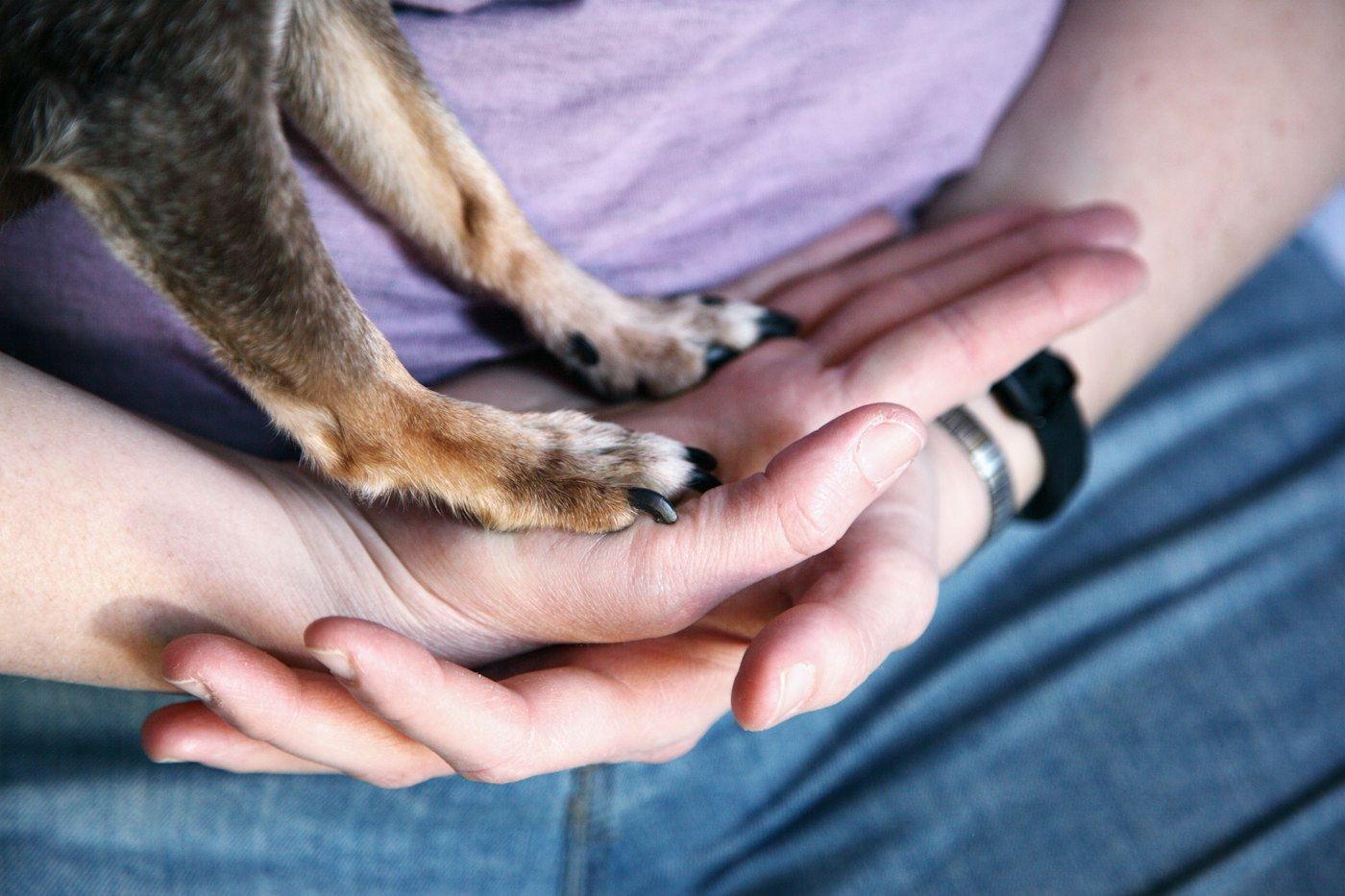
A dog may happily offer a paw for a trick and still panic when nail clippers appear. Nail trimming combines several things many dogs find difficult: holding the foot still, pressure on individual toes, an unfamiliar tool, a sharp clipping sensation and the possibility of a previous painful experience.
Trying to overpower that fear usually makes the next attempt harder. A better strategy is to separate paw handling from the actual nail trim and rebuild tolerance gradually.
Why paws feel different
Feet are sensitive and important for balance. Many dogs naturally pull away when a person holds a toe or isolates a nail. That reaction does not necessarily mean aggression or stubbornness.
If the dog has also experienced a nail cut too close to the quick, the association can become much stronger. Even the sight of the clippers may predict discomfort.
Owners should think of resistance as information, not disobedience.
Start when no trimming is planned
Training works best outside the urgent moment. Touch a shoulder, move down the leg, briefly touch the paw, reward and stop. Later, hold the paw for a second. Then touch a toe.
The dog learns that paw contact does not always lead to restraint or clipping. Keeping sessions very short prevents the training itself from becoming another struggle.
If your dog can tolerate five calm seconds today, that is more useful than forcing a full trim and losing trust.
Introduce the tool separately
Let the dog see and sniff the clippers or grinder without immediately using them. For a grinder, introduce the sound from a distance and reward calm behavior.
A dog that is comfortable with the tool's presence before it touches the nail has one less unfamiliar element to process during the actual trim.
You can also practice touching the closed clippers to the paw without clipping, then reward and stop.
One nail can be a successful session
Owners often feel they must complete all four paws once they begin. That can turn a manageable interaction into a battle.
If the dog tolerates one or two nails calmly, stopping there may be more useful for long-term progress than forcing the remaining nails. The next session can happen later.
The goal is repeated positive experience, not winning one exhausting encounter.
When professional grooming helps
A practiced groomer may be able to position the dog efficiently and complete a routine trim before anxiety escalates. Professional handling can also help owners avoid building more negative associations at home.
Safety for the dog and the handler comes before finishing every nail.
Do not punish warning behavior
Growling, pulling away, freezing and lip licking can all communicate discomfort. Punishing the warning does not remove the fear; it can simply remove the warning.
Instead, reduce the difficulty, slow the training and improve the dog's association with handling. If the dog's stress is beyond what can be safely managed, get help from an experienced professional.
A calm nail routine is built, not forced.
Related guides: Dog Nail Trimming · Dog Grooming Anxiety · Dog Paw Care · Puppy Grooming
When you want a hand, book a groom or see our prices.
Frequently asked questions
Why does my dog suddenly hate nail trims?
A painful previous trim, increasing sensitivity, age-related discomfort or a negative handling experience can change a dog's response.
Should I restrain my dog tightly?
Heavy restraint can increase panic in many dogs. Use the least restraint needed for safety and build handling tolerance gradually.
Are grinders less scary than clippers?
For some dogs yes; for others the sound and vibration are harder. The best tool is the one the dog can tolerate safely.
What if my dog tries to bite?
Stop treating it as a routine home task. Seek help from an experienced professional and, when fear is severe, your veterinarian or a qualified behavior professional.